
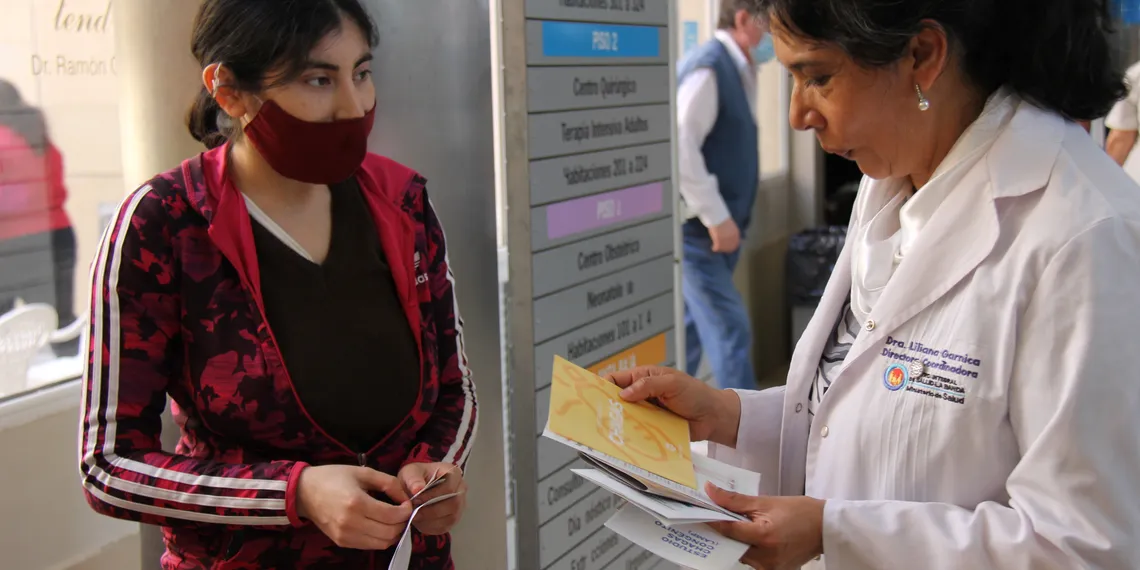
In May 2019, at the 72nd session of the World Health Assembly held in Geneva, April 14 was declared World Chagas Disease Day, with the aim to make the disease visible and make efforts to achieve early detection, expand diagnosis coverage and provide equitable access to treatment.
In Latin America, nearly 7 million people are affected by this disease, whereas in Argentina, almost 1.5 million people are estimated to be infected.
The disease was discovered in 1909 by a Brazilian public health physician, Carlos Justiniano Ribeiro das Chagas, while carrying out a campaign against malaria in the state of Mina Gerais. A few months later, he discovered the parasite and worked on the vector: the vinchuca.
Ignored by politicians in power at that time, Carlos Chagas died without receiving the recognition he deserved for his discovery. A few years later, in Argentina, the physician Salvador Mazza followed Chagas’ steps and made advancements in the research of the disease in the north of the country, with trips to Salta, Jujuy and Santiago del Estero, among other provinces.
What is the current situation of the disease in Argentina? How is it transmitted? Which are the most affected provinces? How complex is its diagnosis and how expensive is its treatment? Why has it not been eradicated yet?
Dedication and commitment
When he was 16 years old, and while his friends were in Villa Gesell on vacation, Héctor Freilij preferred to travel to Catamarca or La Rioja and imagine himself as an adult, helping the most vulnerable sectors through health care. Later, he began to study medicine, was assistant professor in the chair of Microbiology, specialized, travelled, investigated and coordinated the National Chagas Disease Plan for three years. He is a renowned professional and one that everyone consults. He recalls his beginnings: “I started researching this disease because, when I completed the paediatric residency at the Ricardo Gutiérrez Hospital I realized that the word ‘Chagas’ did not exist in the medical vocabulary. It was not present as a differential diagnosis or professional thinking, nobody investigated it, no studies were carried out on blood donors.”
The renowned paediatrician, with more than 90 articles published in international journals, describes three ways of becoming infected with the disease: through the bite of the vinchuca, i.e., the vector; through mother-to-child vertical transmission, before or during childbirth; and through blood transfusion, from the donor to the recipient. The three transmission routes might be controlled if professional work were performed constantly over time, he stated.
“To attack the vector, it is necessary to spray with chemicals every house in the most widely affected areas of the country. Attention must be paid to the foci of vinchucas, such as chicken coops, and then the process must be repeated after six months. However, after that, permanent attention is necessary, since vectors are present in a large part of the field; if there is no permanent epidemiological surveillance, the houses become re-infested. This has worked well, to a greater or lesser extent, depending on the government in power”, says Freilij.
At present, the most widely affected provinces are Formosa, Chaco and Santiago del Estero; however, due to migration of rural populations, there is internal circulation in almost all the districts. Some provinces, which used to have low vector burden (Río Negro, Neuquén, San Luis, La Pampa, Santa Fe, Entre Ríos, Corrientes and Misiones), were able to interrupt this type of transmission. The AMBA region (the Metropolitan Area of Buenos Aires) is also not free from circulation and has thousands of Chagas cases.
The importance of early treatment is an issue on which all specialists agree. Freilij stresses the confirmed fact that the parasiticidal treatment in adolescents and women of childbearing age avoids transmission of the disease to the unborn child. In turn, in the same line, he highlights that diagnostic testing of pregnant women is mandatory and allows rapid treatment of the new-born.
“Combating this disease is a political decision; there is not even a budget excuse: diagnosis and treatment are inexpensive.” Chagas is a forgotten disease because of the lack of patients’ demands and its almost complete invisibility. As we know, many government agents respond to those who show them up. When dengue appears, media coverage and spray applications only focus on that”, states Freilij.
Third-sector actions
Besides the work of health professionals in the public and private sectors, there are other spaces that give their commitment to combating Chagas disease. One example is Mundo Sano Foundation, created in 1992 with the goal to reduce the impact of neglected diseases affecting mainly the most vulnerable populations. The first works on the ground were focused on the prevention and elimination of vertical transmission. At present, actions are focused on diagnosis and treatment.
Marcelo Abril, Chief Executive Officer of the foundation, describes the process: “Making the diagnosis and providing treatment is relatively simple; however, for this purpose, it is necessary to be informed and do it as soon as possible. Only 30% of the people affected by Chagas disease develops cardiac or digestive pathologies. Since treatment must be provided before those symptoms develop, it is crucial to search for cases one by one. The earlier the disease is tackled, the better the results.”
In the last years, vector transmission has decreased, but mother-to-child transmission gained importance. For this reason, since 2019 the Foundation has implemented the campaign “Not a single baby with Chagas disease.” One of the most interesting experiences is being conducted in the Chaco Salteño (in the so called triple border with Bolivia and Paraguay); there, pregnant women from indigenous and rural populations receive diagnosis and further treatment. To date, 2,357 controls have been made, of which 102 were positive, and the corresponding treatments were provided both to mothers and the infected new-borns.
Abril adds that treatment consists only of the administration of pills during 30 or 60 days, depending on the case, and stresses that efficacy is higher and faster in the paediatric population than in adults. “Sometimes, the antibodies in blood may take years to become negative, while at the paediatric level, that conversion to negative serology is much faster”, he states and reinforces the importance of treatment of women of childbearing age to completely eliminate that type of transmission.
“It’s necessary to make the disease more widely known. There is a lack of information and action. Information to the population, to raise their doubt as to whether they could have Chagas and request action; and action by the health systems to offer the appropriate care and to make health professionals think of Chagas. It is double work: encouraging the offer of healthcare and generating demand for healthcare”, states Abril, convinced that there is important work to be done.
A law for prevention
In April 2022, after almost 15 years of being passed in Congress, the Law 26,281 for the Prevention and Control of all the Modes of Chagas Disease Transmission was regulated.
The law declares efforts to combat Chagas disease as of national interest and a priority until it is definitively eliminated in the entire national territory.
Among the most important points, the law establishes that the diagnostic test of pregnant women, and organ and blood donors and recipients is mandatory; prohibits the request of serological reactions in pre-occupational tests of job applicants; incorporates a program about Chagas disease in the educational curriculum; and punishes discriminatory acts and omissions about the disease.
1.5 million people are affected by Chagas disease in Argentina, whereas in Latin America, the number amounts to 7 million.
Today the Chagas disease World Day is celebrated on initiative of the World Health Assembly.